

Team Building Around Ramadan and the Regional Calendar
Team building in the UAE and Saudi Arabia does not happen on a neutral calendar. The rhythm of the year in the region has its own distinct shape, defined by Ramadan and the Eid holidays, the hot summer months, the comfortable winter season, and the regional working week. Team building that ignores this rhythm tends to be poorly timed at best and inadvertently insensitive at worst. The more useful response, though, is not simply to do less during the demanding periods. It is to redesign the experience so that it fits the season, which often means swapping physical intensity for cognitive and collaborative depth rather than scaling the ambition down.
This guide sets out how to design team building around the regional calendar. It gives particular attention to Ramadan, the period that most shapes team activities, because Ramadan is where the difference between avoiding activity and redesigning it matters most. It then looks at how to think about the summer and winter seasons and the working week. The aim is not a rigid schedule, still less a reflex of indoors-in-summer and outdoors-in-winter, but an understanding of the regional rhythm that lets you design the right kind of experience for each part of the year.
Design for the Season, Do Not Just Pause The regional calendar is not a set of periods when team building must be switched off and on. It is a set of design constraints. Each season rules some things out and makes others particularly fitting, and the skill is in designing the experience that suits the constraint rather than defaulting to a single stock answer for each time of year. |
Team Building During Ramadan
Ramadan is the holy month during which many colleagues fast from dawn to sunset. It is a period of spiritual significance and altered daily rhythms, and it calls for a considered approach to team activities. The key is neither to avoid connection entirely during Ramadan nor to carry on as though nothing has changed, but to design experiences that fit the character of the month, which is more than possible once the real constraint is understood correctly.
What changes during Ramadan
During Ramadan, those who are fasting abstain from food and drink during daylight hours, working hours are often reduced, and energy levels through the day differ from normal, particularly in the afternoon. The daily rhythm shifts, with the evening, after the fast is broken, becoming a time of gathering and social connection. Any team activity during Ramadan needs to respect these realities rather than working against them.
The real constraint: physical intensity, not ambition
It is worth being precise about what Ramadan actually rules out, because this is where much Ramadan planning goes wrong. High-intensity physical activity during fasting hours is sensibly avoided: fasting colleagues cannot eat or drink and should not be exerting themselves heavily, so physically demanding challenges and anything involving food or drink during daylight are not appropriate. That much is clear. But physically demanding is not the same thing as elaborate. A sophisticated, cognitively rich experience can be mentally demanding and deeply engaging while asking nothing of the body, and that is exactly the kind of experience Ramadan suits. The mistake is to treat the sensible caution about physical exertion as if it ruled out serious team building altogether.
Elaborate Is Not the Same as Physically Demanding Physically demanding and elaborate are two different things. Ramadan asks you to set aside physical exertion during fasting hours, not to set aside ambition. A seated, mentally absorbing challenge can be every bit as sophisticated as a desert expedition, and it fits the month far better. The opportunity most Ramadan planning misses is to redesign the experience, not shrink it. |
Experiences that work well during Ramadan
Once the constraint is understood as physical rather than intellectual, a wide range of serious, well-designed experiences becomes available. These can run during the working day without asking fasting colleagues to exert themselves, and they can be as challenging and as valuable as anything run at another time of year. Gamma Zone designs and delivers a number of formats that fit the month precisely because their demand is cognitive and collaborative rather than physical:
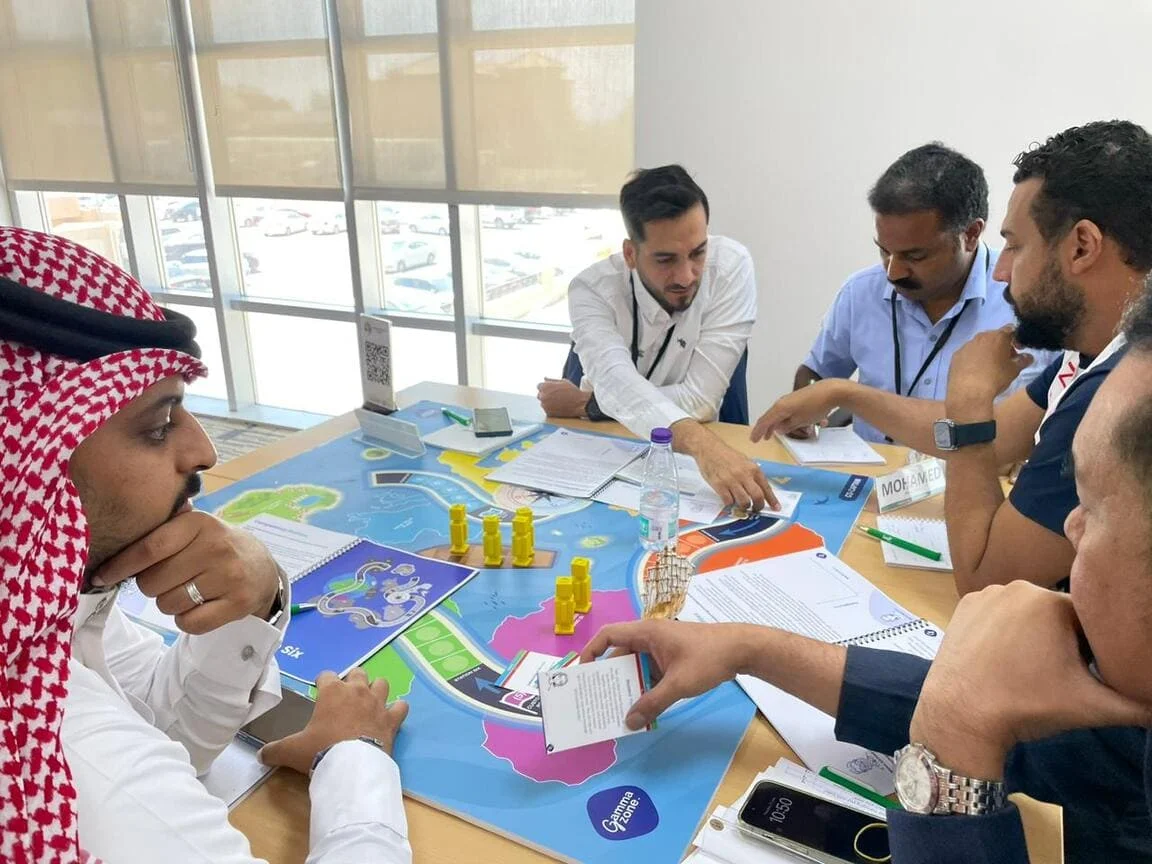
- A tabletop investigation or Crime Arena-style challenge, where teams work through evidence and reasoning rather than moving around
- A business simulation, in which teams make decisions and experience the consequences, entirely seated and discussion-based
- An escape-style challenge designed around problem-solving and communication rather than physical searching
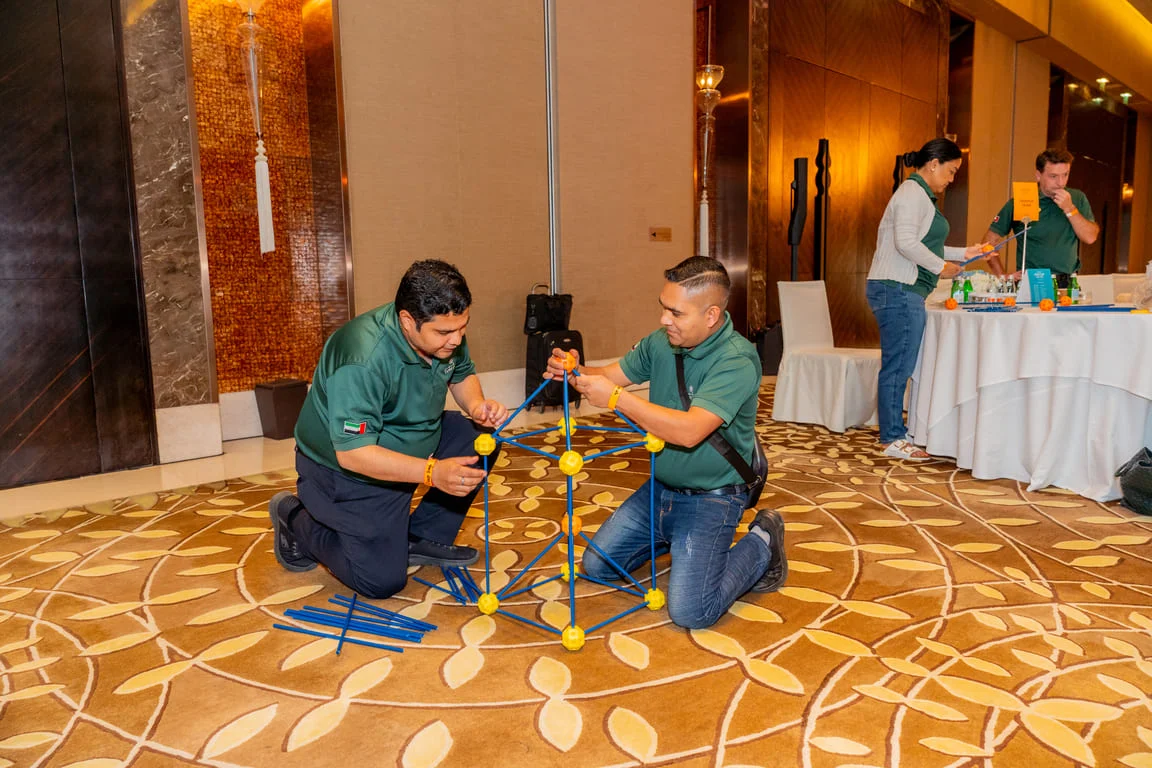
- A collaborative problem-solving experience built around a shared, mentally demanding task
- A LEGO® Serious Play® session, which makes thinking visible and surfaces assumptions through building and discussion
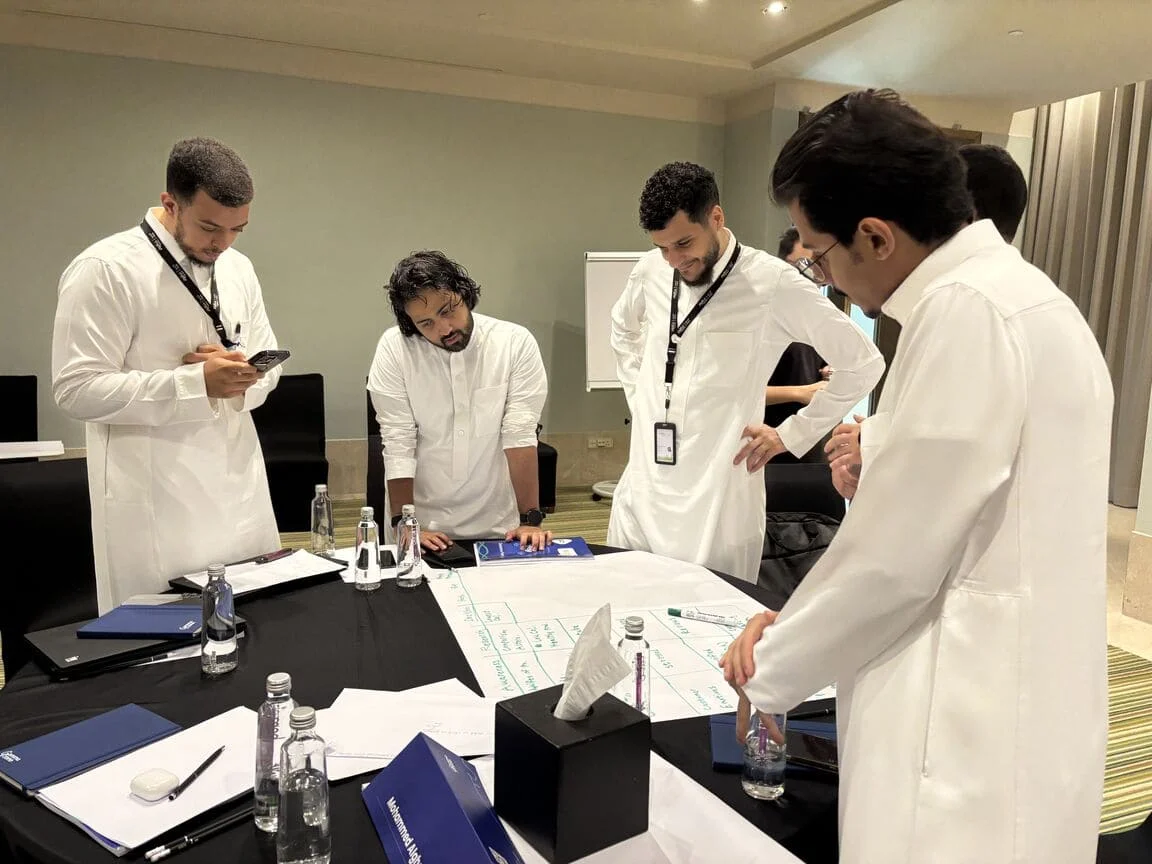
- A team alignment lab, focused on how the team works, decides, and communicates
- A creative challenge that draws on ideas and collaboration rather than exertion
Each of these can be scheduled sensibly within reduced Ramadan working hours and designed to account for lower afternoon energy, for example by keeping sessions focused and well-paced rather than long and draining. The point is that Ramadan does not force a team to choose between a light social gathering and nothing at all. It is entirely possible to run a genuinely substantial, behaviour-focused experience during the month, provided it is designed around the mind rather than the body.
The evening and the team iftar
Alongside these daytime experiences, the evening offers its own distinct kind of connection. After the fast is broken, the iftar is inherently communal, and a team iftar can be a powerful opportunity for connection when it is designed thoughtfully around inclusion, conversation, and shared experience. It is one good option among several rather than the only thing Ramadan has to offer, and it complements the more structured daytime experiences rather than replacing them. A team might run a focused experiential session during the day and gather for an inclusive iftar in the evening, drawing on both registers of the month.
Being genuinely inclusive during Ramadan
Thoughtful Ramadan team building is inclusive of everyone, both those who are fasting and those who are not. Not all colleagues fast, and inclusive planning neither excludes non-fasting colleagues nor makes fasting colleagues uncomfortable. A well-designed daytime experience is naturally inclusive, since it does not revolve around food, and a well-planned team iftar welcomes everyone regardless of whether they have fasted. The aim throughout is connection that includes the whole team while respecting the significance of the month for those observing it.
The Eid Holidays
Ramadan concludes with Eid al-Fitr, and Eid al-Adha follows later in the year. These are major holidays and times for family, and they are generally not periods for corporate team activities. It is worth being aware of when the Eid holidays fall each year in planning the calendar, both to avoid scheduling team building during them and to recognise that the periods immediately around them may be quieter as people travel and take leave. Planning team building for the periods well clear of the Eid holidays avoids poor timing and respects the importance of these occasions.
The Summer Season
The summer months, roughly June to September, bring intense heat to the region, with high temperatures that make outdoor activities difficult and often unsafe during much of the day. This shapes what kind of team building is practical in summer, though it narrows the options less than it first appears. The season also tends to be quieter in many organisations, as people take leave and travel during the school holidays.
Adapting to summer
Summer naturally directs team building indoors, but indoors is not a lesser option. The same sophisticated, air-conditioned experiences that suit Ramadan, simulations, tabletop challenges, problem-solving experiences, facilitated workshops, suit the summer equally well, and can be as substantial as any outdoor activity. The heat rules out much outdoor exertion; it does not rule out serious team building. Treating summer as a season for real, well-designed indoor experiences, rather than as a gap to be endured until the weather cools, makes far better use of the months when people are in the office.
The Winter Season
From roughly October to April, the region enjoys comfortable temperatures that open up the full range of team building, including the outdoor and desert experiences that the rest of the year makes difficult. This is the broadest season for options, and it is unsurprisingly the busiest, with popular venues and providers booking up well in advance. Winter is the natural time for the activities that genuinely need comfortable weather, which is a reason to reserve it for exactly those, rather than using it for experiences that could run indoors at any time of year.
Making the most of winter
Because winter is when outdoor and larger-scale team building is most comfortable, it is worth planning ahead for this season and booking early, since demand is high and the best options are taken well in advance. It is also worth being deliberate about what winter is used for. The indoor, cognitively focused experiences that work through Ramadan and summer can run at any time, so reserving the comfortable months for the outdoor and larger-scale experiences that truly depend on the weather makes the most of a limited window.
The Working Week and Prayer Times
Beyond the seasonal rhythm, the regional working week and daily prayer times shape when team building can be scheduled within any given week. The working week in the region runs differently from the traditional Western week, and team building should be planned around the actual working days and the weekend as they fall locally. Daily prayer times also punctuate the day, and considerate scheduling allows for them rather than cutting across them. Attending to these rhythms is a matter of both practicality and respect, and it helps ensure team activities are well attended and well received.
A Seasonal Overview
Period | Design Constraint | What Fits It Well |
| Ramadan | No physical exertion by day; lower afternoon energy; evening gathering | Cognitively rich seated experiences (simulations, tabletop and escape-style challenges, LEGO Serious Play, alignment labs) plus an inclusive evening iftar |
| Eid holidays | Major holidays, family time | Generally avoid scheduling team activities |
| Summer (Jun to Sep) | Too hot for outdoor exertion; quieter | Substantial indoor and venue-based experiences in air-conditioned settings |
| Winter (Oct to Apr) | Comfortable; full range available | Reserve for outdoor, desert, and larger-scale experiences that need the weather; book well in advance |
The Bottom Line
The regional calendar gives the year in the UAE and Saudi Arabia a distinct rhythm, and the best team building works with that rhythm by designing the right experience for each season rather than defaulting to a single answer for each. Ramadan rules out physical exertion during fasting hours, but not ambition: sophisticated, cognitively rich experiences such as simulations, tabletop and escape-style challenges, and facilitated sessions fit the month well, alongside an inclusive evening iftar as one option among several. Summer directs team building indoors, where it can be just as substantial, and winter opens up the outdoor and larger-scale experiences that genuinely need comfortable weather.
Seen this way, the calendar is less a set of restrictions than a set of design constraints, each of which points toward a particular kind of well-designed experience. Organisations that understand this, and work with a partner who can redesign an experience to fit the season rather than simply postponing it, can run genuine, behaviour-focused team building throughout the year. Team building that respects the calendar is both more effective and a clear signal of real consideration for the people it is for.